Author: Rachel

  • Proofreading vs Copyediting vs Line Editing

    Thousands of editors have tried to explain the difference between the levels of editing. I’ve even done it myself, but I’ve long wanted to really show the differences between line editing, copyediting, and proofreading. (Developmental editing is a completely different beast—you can learn a little about it in this explanation of manuscript evaluations.) So I asked ChatGPT to write a story for me. It’s one of the few legitimate uses of generative AI I can justify—I knew it would be poorly written and would need work, and sharing it doesn’t violate the privacy of any of the authors I work with.

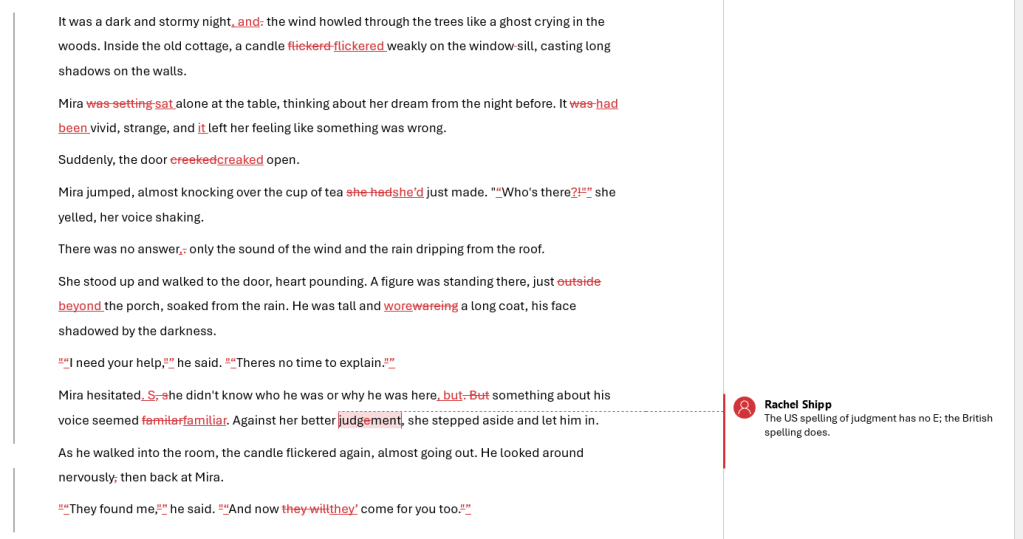
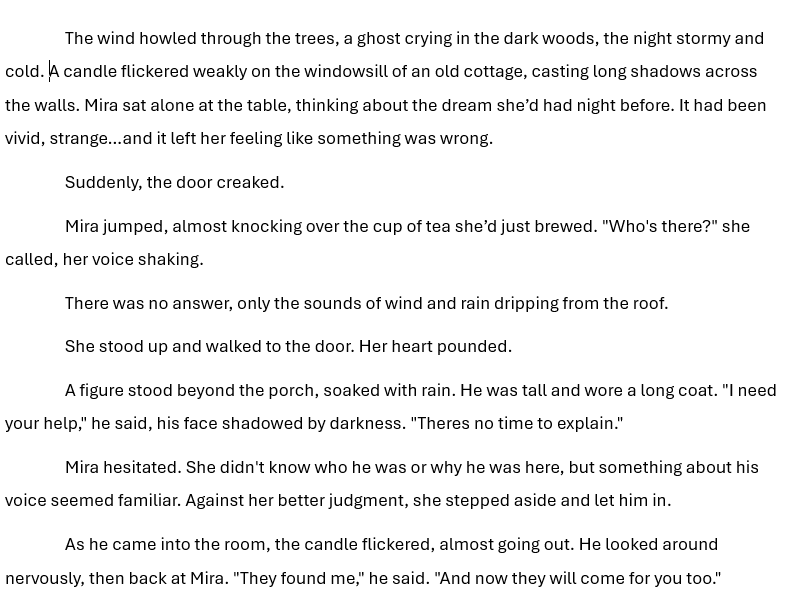
    In the following pictures, you’ll see marked-up versions of the story for each level of editing. At the end of this post, you can find the original story and the fully edited story.

    First up is proofreading. As you can see, the changes are very simple and focus mostly on spelling and punctuation corrections. Proofreading doesn’t fix your prose; it is only makes sure everything is correct and follows the style sheet.
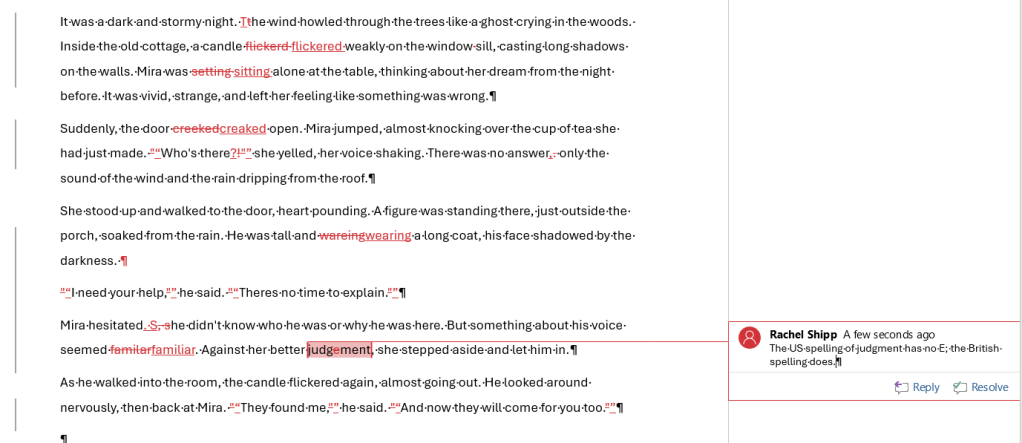
    Next is copyediting. You can see the same changes I made in the proofreading round, but I’ve also changed some of the words for a more active and exciting tone. In a longer text, copyediting would include making sure things are consistent throughout the manuscript—are you main character’s eyes gray, grey, or blue? Is the pirate ship always called Titan’s End or Titans’ End?

    Finally, this is my line edit of the story. Here, you can see where I’ve focused on the syntax and mood of the story. Along with changing the text, I’ve explained to the imaginary author how to add tension and avoid clichés. I also do a decent amount of fact checking in my line edits, but not every editor does.
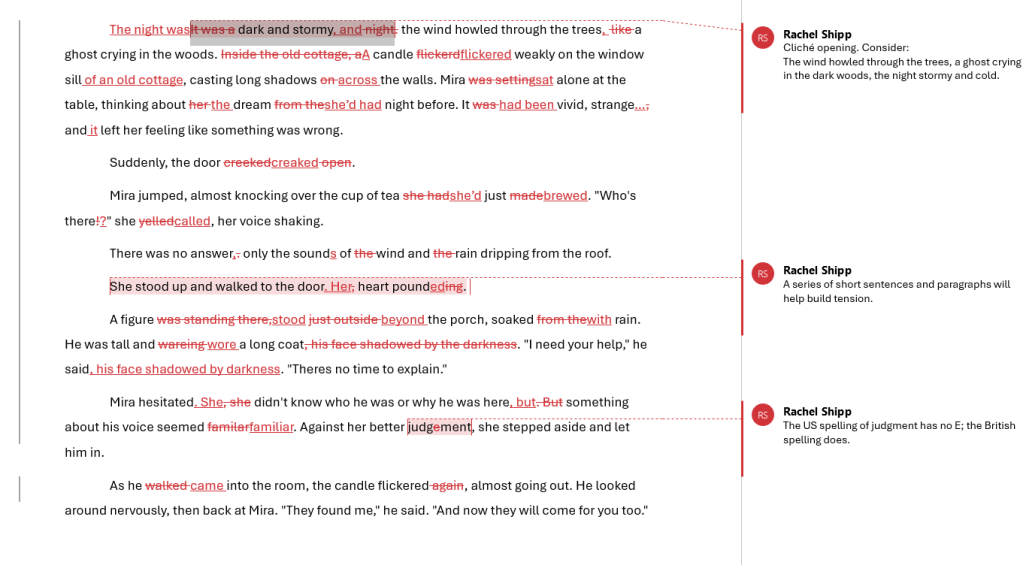
    As always, the lines between each of these levels are very blurry. I stopped offering separate services because I couldn’t stop myself from line editing every manuscript, no matter what service I’d been contracted for. As such, I do a little bit of them all between the two passes.

    If you choose to contract different editors for each step, start with the line editor and work backward—there’s no point in proofreading text that will have large changes made to it.

    Click here to learn more about my services. And as always, please contact me with any questions about anything you read on my website.

    For the sake of comparison, here is the original story as given to me by ChapGPT.

    And here’s the story after all my editing.
  • Writing is Actually About Reading

    Writing is Actually About Reading

    I’m going to tell you a secret: editing is largely subjective and there are fewer rules than you’ve been led to believe. I mean, there are rules and guidelines, but how to apply them is subjective. You can give five editors the same passage, and you’ll end up with five different final versions.

    And that’s okay.

    Because here’s another secret: writing a novel is really about reading.

    I’m going to repeat that because it’s so important.

    Writing a novel is about reading.

    How good or unique or clever your story is won’t matter if you have no one to read it, if you have no one who wants to read it. As the author, you want your reader to be engaged and interested in your story so they want to find out what happens next.

    And that’s where the rules and guidelines come into play. These rules help readers know what to expect. When a reader sees a quotation mark, they know a character is speaking. When a reader sees an apostrophe, they know it’s for a conjunction or to show possession. Knowing when and how to disregard the rules is as important as just knowing them—if there’s a period after only one word (an incomplete sentence), the reader will understand it’s an important word.

    And that brings me back to the first secret—editing is largely subjective. The changes I make in an author’s prose are not necessarily the same changes another editor would make, because editing is a collaborative process. An author writes a sentence, the editor makes a suggestion about how to improve the sentence, and the author decides whether the suggestion helps or hinders the message they’re trying to convey.

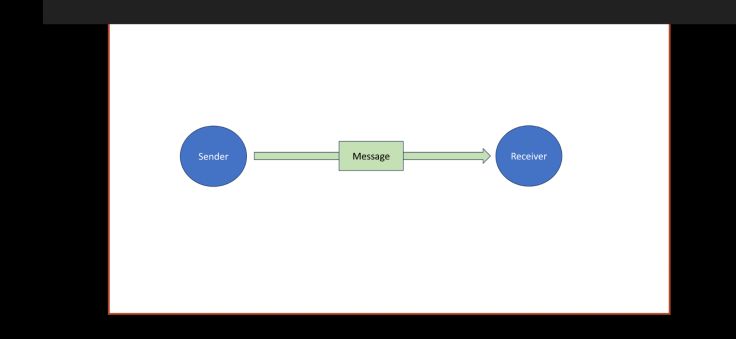
    Way, way back a long time ago when I was in college, we discussed a basic communication model in several classes (which made sense—I majored in mass communication). The basic idea is to have a sender, a receiver, and a message. The sender creates a message and sends it to the receiver, who interprets the message. In an ideal world, everybody is on the same page.

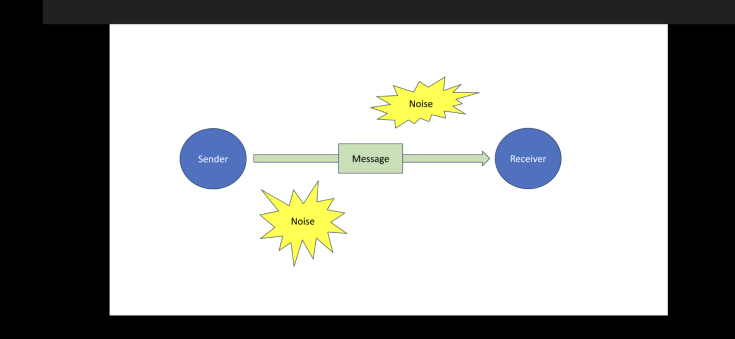
    The problem comes from not living in an ideal world. In the real world, each person comes to the message with their own knowledge and expectations—what we call noise here—and the message can be misinterpreted.

    Sometimes it’s because the sender assumes knowledge the receiver doesn’t have; sometimes it’s because the receiver has a weird bit of trivia the sender doesn’t have. The actual reason for the misinterpretation doesn’t matter. The problem is that there’s a misinterpretation at all.

    Which is why you hire an editor: to get rid of the noise—or as much noise as possible. Each editor is making sure the reader interprets the message the author is trying to send. It’s not just correcting commas and homonyms. I regularly ask authors “Does this sentence mean XX or YY?” or “Who is speaking here?” And I ask those things because I want your readers to love your story as much as you do. I want them to feel what your characters feel, to know what your characters know.

    When I’m working with a manuscript, I’m guided by this reader experience. I want to make sure your readers have the experience you want them to have, which means preserving your voice through every stage of the editing process. And that brings us back to editing as a subjective thing. If any editor is changing your message too much, then that editor isn’t the right fit for you (though they may be for someone else).

    If you have any questions about this or anything else you’ve read here, please feel free to reach out to me at any time.

  • 3 Easy Ways to Improve Your Writing Today

    3 Easy Ways to Improve Your Writing Today

    New writers have so much creativity, and I genuinely enjoy seeing how they approach plot and character. It never ceases to amaze me how many different ways there are to say the same thing. Every manuscript offers new insight to writing and storytelling.

    But there are things new writers do that immediately reveal their inexperience. So I’ve come up with this short list of things you can look for while self-editing your manuscript. Look at each case individually though. Sometimes you want these things in your writing—they give emphasis or provide variety. You just need to be careful about using them too much.

    1. Filter Words

    There are two categories of filter words I’m going to address right now. First are sensory words, things like saw, heard, know. The second are intention words like started to or tried to.

    As long as the POV is clear, your reader will know the character is seeing, hearing, or knowing what is being described. Using these words in your initial draft is a good way to get into your character’s head to figure out what’s happening in the scene, but you should remove them as soon as you can.

    • Incorrect: Jessica saw the sun set and heard an owl hoot as she walked to the store.
    • Correct: The sun set and an owl hooted as Jessica walked to the store.
    • Incorrect: I knew there was a secret door behind the bookcase.
    • Correct: There was a secret door behind the bookcase.

    If you can remove the sensory word without changing the meaning of the sentence, then you might want to hit that delete key and move on to the next one.

    Intention words are only needed if the character is unsuccessful in whatever they are starting or trying to do. The reader only cares about the final action.

    • Incorrect: Lydia started to weed the garden and left it clean and neat.
    • Correct: Lydia weeded the garden and left it clean and neat.
    • Also Correct: Lydia started to weed the garden but was unable to get it completely clean and neat before the rain drove her inside.

    2. Too much progressive tense

    There are many different tenses in the English language. It’s a rare manuscript that is written solely in simple past or simple present tense. And you should have multiple tenses to add variety to your prose and keep your reader engaged (though you should stick to past or present overall). Progressive tense is when you are using a combination of to be—was, is—with the participle—verbs that end in ing. Often, this combination is an appropriate way to show simultaneous actions or interrupted action.

    • Correct: Mark was cooking dinner when he heard an alarm down the street.
    • Correct: Jen is changing her clothes while listening to her voicemail.

    But this tense can result in overuse of to be verbs, which then leads to reader disengagement. Whenever possible, delete the to be and use the action verb alone.

    • Incorrect: Justin was cleaning his room before going to school.
    • Correct: Justin cleaned his room before going to school.
    • Incorrect: Mary is wearing a sparkly pink top, and Jon is looking sharp in his suit.
    • Correct: Mary wears a sparkly pink top, and Jon looks sharp in his suit.

    Again, don’t delete all instances of progressive tense. But if it doesn’t change the meaning of your sentence, consider correcting to the simple verb.

    3. Too much emphasis on…everything

    There are multiple ways to show how important something is to your story or character. It’s very easy as a new writer to overuse them, and then nothing is important because you’ve made everything important. Trust your story to show it, and trust your reader to understand.

    First, exclamation points should be used sparingly. Too many exclamation points can feel like the reader is being shouted at. Use your narrative text to show shock or excitement. Never use double exclamation points (one of the few strict rules), and try to limit yourself to only one per piece of dialogue.

    • Incorrect: “Wait!!! What do you mean by that? You can’t be serious!” I shouted at them.
    • Correct: “Wait! What do you mean by that? You can’t be serious,” I shouted at them.

    Second, italics for emphasis should also be used sparingly. Trust your reader to intuit the important words from the strength of your writing. The surrounding text should provide all the context a reader needs to understand what your character is feeling or thinking about something.

    • Incorrect: What did he mean when he said I couldn’t have dinner right now?
    • Correct: What did he mean when he said I couldn’t have dinner right now? [Honestly, this sentence probably doesn’t need any emphasized words, but it depends on what happened before and after in the story.]

    Finally, don’t use bold or all-caps. I was going to say never use them, but there are very rare occasions in fiction when bold is appropriate and even rarer times for all-caps. Really think about the necessity before adding bold and all-caps to your manuscript.

    My final caveat is to tell you to be aware of these issues but don’t follow my guidelines to the point you lose your own voice. Implement these corrections in the way that best serves your story, and you should be fine.

    If you have any questions or want to discuss this further, please feel free to contact me at any time.

  • Finding an Editor You Can Trust

    Finding an Editor You Can Trust

    Trusting someone else with your manuscript is one of the more difficult aspects of becoming an author. We editors know that. We understand your heart and soul are in that manuscript, and we only want to help make it better. But not every editor works well with every author. Finding the right one for you can feel like a minefield of choices. Fortunately, there are ways to make that decision easier.

    My absolute #1 piece of advice for choosing an editor is to get sample edits. Many editors will edit a sample of around 1,000 words for free, though some charge a nominal fee—time is money, after all—but apply the fee to the final cost if you hire them. Make sure you send each editor the same sample of your work so that you can directly compare their skills and style. This sample can indicate which editor is the best fit for you. Does an editor over- or under-explain their changes? Did they miss obvious errors the other editors found? Do the changes they made preserve your voice and writing style? Does the sample reflect value for the cost?

    I recommend getting samples from no more than five editors—more than that can lead to choice overload. So how do you find those five editors?

    • Ask for recommendations from other authors, either through an online group or people you know personally.
    • Most professional organizations have directories you can filter by specialty. (Just google “editors association” with your country to find the right one for you.)
    • Check the acknowledgements in a self-published book you have enjoyed reading. Not all authors include their editor (and it’s not generally a requirement), but it can be a place to start.

    A few things will indicate how serious an editor takes their business. These things aren’t necessarily deal-breakers, but they should be taken into consideration.

    • Most independent editors have a website that can give insight to the editor’s personality and process.
    • Check to see if they’re members of a professional organization.
    • Are there reviews or testimonials on their website? I hesitate to include this because *I* don’t have many testimonials. It’s awkward to ask someone to tell you how great you are.

    Finally, there are a couple of things you should watch for in the editorial proposal or contract. These are deal-breakers.

    • Make sure there is an NDA (Non-Disclosure Agreement) clause to protect your privacy.
    • Copyright must stay with the author. No reputable editor will want to share copyright.
    • Payment should be explicitly explained—how much and how many payments, as well as when they are due and how to make them.
      • Be cautious of editors who ask for full payment upfront. As with many contractor relationships, a deposit at the beginning and full payment before delivery is very common. If you can verify an editor’s reputation for delivery, it’s probably fine to pay up front, but be aware this is an area where scams can happen.
    • There should be a clear cancellation policy. What happens if you need to cancel the project? What if the editor needs to cancel?

    Hiring an editor is a leap of faith, just like hiring a contractor to remodel your bathroom. You can do your due diligence for weeks or months or even years, but eventually you just have to trust someone to do the job you’re hiring them to do.

  • What to Expect from a Manuscript Evaluation

    What to Expect from a Manuscript Evaluation

    It’s difficult to know what to expect from a manuscript evaluation. There’s virtually no way to do a sample because it’s impossible to see how a plot or character develops over the course of a book if I only have a few pages. So I’m sharing my very basic template with you, but I’m always adding or removing sections as needed. Every evaluation is different. Every author and every manuscript has different strengths and weaknesses. Even two manuscripts from the same author would have different focuses in the evaluation.

    So this is how I start. I read each manuscript in full at least once, though my goal is to read it twice. I take notes and have a color-coded highlighting system that rivals my college microbiology notes. I then compile those notes and highlights into the report. Whenever possible, I use specific examples from your manuscript to explain how to improve things.

    Passages I Like

    Manuscript evaluations can feel brutal. You can’t improve unless you know what’s wrong, and it can be disheartening to read. I like to start with a section that includes only things I liked…often things I loved. These are usually sentences that jumped out at me for having strong images or an interesting use of words or just something that tickled the word-nerd in me.

    Summary of Your Manuscript

    Basically, I retell your story here. Usually (but not always), I separate the main plot from any subplots. Seeing what I’ve found to be important to your story will give you insight to how readers may interpret it. If I’ve missed a major plot point—especially if this is a series and that plot point comes up in a later book—you’ll know to give it more emphasis.

    Structure & Plot

    This section focuses on things like pacing, chapter and section consistency, tension building, etc. It’s a really broad category, but it is possibly the most important; I often end up breaking this section into additional subsections. If there’s a particular issue with pacing, or if you’re doing too much telling and not enough showing, they’ll get their own sections. I’ll also be looking for plot holes and checking to ensure the plot makes sense in general.

    Character Development

    In this section I break down the main characters (at least two, often more) and follow their individual paths through the story, making sure their character arcs are believable and that the reader will identify with them. I will tell you what I liked about the character along with what I didn’t like. If the character is unlikable or boring, I will offer suggestions about how to improve their personalities.

    World Building

    World building is different for every manuscript. Obviously, for a high fantasy or science fiction manuscript, I’ll be making sure the physics and rules of the world make sense and are internally consistent. In a historical book, I’ll check for anachronisms. Even a contemporary novel requires some world building verification—I’ve looked at maps, googled restaurant names, checked military designations, whatever the manuscript needs.

    Voice

    Does your narrator’s voice stay consistent and true to the story? You probably don’t want your Regency romance narrator to describe the duke as “hot” or “sexy.” Additionally, if your story is told from multiple characters’ viewpoints, I’ll let you know if you need to do more to distinguish them. There are few reading experiences worse than not knowing whose chapter you’re in. I’ll also make sure your story stays in past or present tense—slip-ups of this sort are very common. I’ll also make sure you don’t accidentally slip from first-person narration to third (this is most likely to happen if you changed point of view partway through writing or revising).

    Dialogue

    Here, I’m looking for realistic dialogue and making sure the voice of each character seems true to the character. For example the mayor of a large, modern city isn’t likely to say “ain’t,” but the mayor of a small town in 1850s Texas might.

    Grammar & Punctuation

    Because of my background in copyediting, I can’t help but notice grammar and punctuation mistakes. If there is something that you do consistently wrong (punctuation around dialogue and commas in general are big ones), I’ll explain how to correct that tendency.

    Other Editorial Issues

    There’s always something that doesn’t fit neatly into one of the other categories. There are usually multiple somethings. This is where you’ll find them.

  • How to Self-Edit

    My number one piece of advice for self-editing is to put your manuscript away for at least a month. You will be surprised at how much you’ve forgotten, making it easier to identify the problems in your manuscript. While you’ve got it put away, read Self-Editing for Fiction Writers for a detailed explanation of what to look for during this process.

    The best way to approach self-editing is to think of it as your own editing process, which means you’ll go through each level of editing on your own.

    As I explained in my article about preparing your manuscript for an editor, getting a book to publication is not a quick process. Plan to read through the full manuscript at least three times, probably more.

    Stage 1: Developmental Editing. You’re going to look for big picture issues—plot holes, character development, story arcs. If you didn’t start with an outline, now is the time to create one. I recommend reading your manuscript on a tablet or e-reader if you’re able to, taking physical notes of any issues you find. This way you’ll be less tempted to fix as you go—sometimes the solution is found later in the novel. Tracking the problems by chapter and page will make it easier to rewrite the relevant scene(s). You may end up rewriting your entire manuscript, and that’s okay.

    Stage 2: Content or Line Editing. You should still be reading on a tablet and taking notes on paper. This is where you’re going to look for show vs tell, make sure your dialogue feels genuine, examine individual scenes for authenticity, etc. Pay special attention to action and love scenes in this stage to make sure your characters are moving in ways that are actually possible. This is the stage to fact-check yourself—is that park your characters are walking across actually big enough to support twenty-eight pages of dialogue? Is that a real street in your city? A fair amount of rewriting will happen in this stage.

    Stage 3: Copyediting. You’ll probably want to do a couple of passes for copyediting. Do this editing phase on a computer, making changes as you go. This is where you need to examine punctuation and grammar. Watch for misplaced modifiers. Make sure dialogue tags and action beats are varied. Look for repetitive words—sometimes you’ll find a cluster of them in one scene, other times you’ll find the ones you just like and overuse (every author has them). Do one entire pass for commas, whether you’re adding or removing them. When I copyedit, this list has the kind of things I’m looking for—you could easily do separate passes for each section. The changes in this stage will usually be small and easy to do.

    After you’ve gone through each of these stages, your manuscript will be ready to share with other people. Start looking for beta readers or an independent editor.

    Some other quick tips for seeing your manuscript with new eyes:

    • Change fonts for each pass as you read it
    • Print it out to read as if it were a physical book
    • Use a text-to-speech app and read along (Word has a built-in option)
    • Read it out loud yourself

    I know this seems like a lot of work, and you might be sick and tired of your story by the time it’s done, but every improvement you can make before sending it to an editor will pay off in the end. It’s all about creating the best experience possible for your future readers.

  • Said Is (Not) Dead

    “Said is dead.”

    “Always use said.”

    Contradictory advice in the writing community is common. But really, how does one write a good dialogue tag?

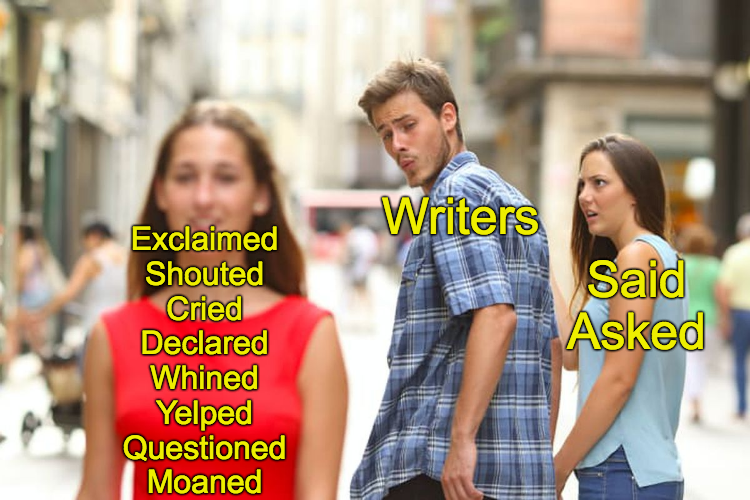
    Well, first and foremost, the purpose of a dialogue tag is to tell the reader which character is speaking. That’s it. For that purpose, said is actually the best word to use. It’s a nearly invisible word, like the or and. The problem comes when you use said on every piece of dialogue.

    “Hey, John, where are you going?” Alexa said.
    “To the store,” John said.
    “Can you get some eggs?” Alexa said.
    “Sure. Anything else?” John said.

    In that example, only the first piece of dialogue needed any kind of tag because it’s clear who is speaking. And the repetition of said is boring.

    But what if we want to use synonyms for said? Sure, you can do that.

    “Hey, John, where are you going?” Alexa questioned.
    “To the store,” John shouted.
    “Can you get some eggs?” Alexa requested.
    “Sure. Anything else?” John wondered.

    It’s marginally better, but still a little boring. If you’re just replacing said with replied, asked, stated, etc, you’ll end up overusing those words instead. It is still repetitive.

    So how do we keep it interesting? You could try adverbs to describe how the dialogue is spoken.

    “Hey, John, where are you going?” Alexa said confusedly.
    “To the store,” John said loudly.
    “Can you get some eggs?” Alexa requested.
    “Sure. Anything else?” John wondered aloud.

    Using adverbs helps, but can become repetitive even faster than synonyms for said. Go ahead and use them from time to time but keep it to a minimum.

    My preferred way to keep your reader engaged, though, is to use action beats. These little nuggets can add so much more information than either synonyms or adverbs.

    “Hey, John! Where are you going?” Alexa glared at the man who had just stormed to the door.
    “To the store!”
    “Can you get some eggs?” Melissa sheepishly handed him some money.
    “Sure. Anything else?” John scowled at the others in the room.

    Whoa! This simple exchange just became much more intense. And there are other people in the room? Who knew?

    Now try this:

    “Hey, John, where are you going?” Alexa glanced to her roommate, who was standing near the door.
    “To the store.”
    “Can you get some eggs?” Melissa handed him some money.
    “Sure. Anything else?” John looked at the others in the room.

    I’ve changed the entire tone of the conversation, just by adjusting the action beats. I haven’t used a single dialogue tag, including said. You’ll also notice that I didn’t put anything to indicate John is speaking, and yet you still know it’s him. Be careful using action beats on every piece of the conversation, though, or you’ll end up with characters who are constantly raising an eyebrow, standing, sitting, smiling, crossing the room, raising an eyebrow again—wait, is this the same eyebrow? Did they put it down? You see the problem. It’s exhausting to read about a character who is moving too much.

    And that’s the crux of it. You don’t want to become repetitive. Mix up your dialogue tags, use action beats, add an occasional adverb, and sometimes just let the dialogue stand alone. As long as your reader knows who is speaking and you’re not repeating yourself in the narrative, you’re doing it right.

  • What Does a Copyeditor do?

    What Does a Copyeditor do?

    “What does an editor do? Just check grammar and spelling?”

    Well, yes, but it’s so much more than that too.

    On a purely mechanical level, I read your manuscript in full at least three times. The first time is a quick skim to get a sense of the story and, more importantly, your writing style. The second read through is very close and takes the bulk of my time with your manuscript. I’ll discuss this pass in detail below. After you’ve had a chance to review my edits, I’ll go through it a third time to make sure I didn’t miss anything. (The Editing Process goes into detail about this back-and-forth communication.)

    Now back to that first, detailed reading of your manuscript. For the past month or so, I’ve been keeping track of issues I’ve corrected while copyediting.

    • Sentence structure
      • Restructure awkward sentences
      • Break up run-on sentences
      • Ensure sentence structure is varied
    • Deletions
      • Extraneous or filler words (that, as, very, etc. aren’t always needed)
      • Repetitive words or phrases: nobody wants to read the same words or phrases over and over
      • Redundant words or phrases; you may be surprised by how much action is implied in surrounding text
    • Dialogue
      • Check that it’s clear who is speaking, especially in longer conversations
      • Ensure dialogue tags and action beats are varied (see note on repetitive words above)
    • Check for internal consistency
      • Obvious things like a character’s appearance or location
      • Less obvious things like how you use ellipses (… vs . . . )
    • Simple Formatting
      • Line indent at the beginning of a paragraph rather than tab or spaces
      • Separation of body text and header text
      • Remove extra spaces left after revisions
    • Simple fact-checking
      • Is there math in your manuscript? I’ll double check the accuracy to the best of my ability
      • Verify quotes are correctly attributed
      • Ensure the clothing or food mentioned is reasonable for the time or place of your story

    Not every manuscript needs every type of correction mentioned above, but it’s a lot more than making sure the commas are in the correct place or that your verbs all agree with their subjects. When I’m finished checking your story, your reader’s experience will be more enjoyable.

  • When is My Manuscript Ready for an Editor?

    This is inspired by questions I often see in writing groups on Facebook. How do you know you’ve done as much as you can without outside help?

    The truth is that there’s no definitive answer. But there are some steps that everybody should take. Just remember, making your manuscript the best it can be is not a quick process. This is a general guideline, and everybody’s process is different. Steps one through eight apply to all publishing paths; the final two steps are mostly for self-publishing, but some authors prefer to go through the whole process before submitting to agents and publishers.

    1. Make sure you have at least one alpha reader or critique partner reading your work as you write it. You don’t have to take all of their suggestions, but they can help you work through sticky points in your plot or improve whatever area of writing is your weakness (descriptions, dialogue, etc.).
    2. Once you’ve included the feedback from your alpha reader(s), put the manuscript aside for about a month while you do something else. This month will give you some temporal distance from your manuscript, making it easier to spot the problems. It’s a good time to read Self Editing for Fiction Writers.
    3. Do a round of self editing. Look for plot holes, awkward scenes, and grammar and punctuation mistakes.
    4. Repeat Steps 2 and 3 as needed.
    5. Do a round of beta reading. Try to have at least three beta readers who you don’t know. People in publishing will be your best beta readers because they understand the value of honest feedback.
    6. Incorporate your beta readers’ suggestions. Again, you don’t have to do everything they say, but at least think about it before rejecting their ideas. They are representing your future audience. If your beta readers are all saying something doesn’t work, your future readers will probably have the same problem.
    7. If you ended up doing a lot of rewriting, it’s a good idea to repeat Steps 2 through 6. The more improvement you do on your own, the cheaper your professional editing will be. Even the most basic beta reader should be able to point out big problems like plot holes or unbelievability, which will allow your editor to focus on subtler problems like character arcs or structural issues.
    8. This is the point to contract with a developmental editor. Not only will they tell you what is or is not working in your story, they’ll be able to give concrete advice on how to fix those problems. How much back and forth you’ll have with the editor will depend on the needs of the manuscript. Significant rewriting and revising is expected during and after developmental editing. An alternative to full developmental editing is a manuscript evaluation. It will be less expensive, but also less thorough, so really think about what your manuscript needs before choosing this option.
    9. Hire a copyeditor. Sometimes this person will be the same as your developmental editor, sometimes it’s someone new. Make sure you’ve gone through your manuscript at the sentence and word level to make it as clean as you possibly can to save money on the copyediting.
    10. Hire a proofreader. Sometimes, this will be rolled into copyediting, but it’s important to clarify that before signing any contracts. I recommend a completely fresh set of eyes for this step. Ideally, your formatter is also a proofreader.

    At this point, your manuscript is ready to be turned into a book. You’ll still need to get a cover designer and a formatter, but the manuscript itself is ready to go.

    For more information on editing, read Why Do I Need an Editor? and What Kind of Editing Do I Need?

    Editor and book coach Lisa Poisso has a fantastic flow chart with similar steps to those I outlined above that goes beyond the manuscript.

  • What Kind of Editing do I Need?

    I see a lot of confusion about what, exactly, an editor does. That’s because editor is often a catch-all word used to describe anyone who helps the author get a manuscript ready for publication. So here is a very simplified way of looking at different editorial roles. Keep in mind, every publishing house and every editor defines each role slightly differently, and there’s a lot of overlap between the levels. If you were to hire an editor for each level, start at the top (developmental editor) and work your way down–proofreading an early draft that will be largely rewritten is a waste of time and money.

    Developmental Editor

    This is editing that looks at the story as a whole. The developmental editor will advise on what is or is not working in your story. They’re not going to make many notes about your prose but will give you an overall idea of what to do for your next draft—expand dialogue, focus on your character’s emotions, another character is underdeveloped, your action sequences are confusing, etc. The developmental editor will give advice and use examples that are unique to your writing style and story. Rewriting and revising are a huge part of developmental editing.

    Content or Line Editor

    This editor will look at the story at the paragraph level, while keeping the story as a whole in mind. A line editor may restructure a sentence or a paragraph, or move a sentence from one page to an entirely different page. The line editor’s goal is to make sure the message the author is trying convey is the one the reader receives. They really try to get into an author’s head so the changes are consistent with the writer’s style. This editor will likely clean up many copyediting issues along the way, but it’s not the main focus. Line editing is sometimes called content or structural editing.

    Copyeditor

    The copyeditor is looking at the manuscript at the sentence level. I believe this is what most people are referring to when they talk about editing. The copyeditor cleans up grammar, tightens up wordiness, eliminates repetition, etc. This editor will make sure things are internally consistent because you don’t want your character’s eyes to be blue in chapter 4 and green in chapter 20. This is probably the most critical level of editing to make sure your manuscript has a professional look and feel.

    Proofreader

    The proofreader is looking at the manuscript at the word level. They clean up spelling and punctuation mistakes. Originally, proofreading was completely separate from all other editing, as the proofreader compared the printed proof of a manuscript to the edited draft to make sure all changes were included. With the move to electronic editing, the proofreading role has changed to look more like copyediting at a micro level. Ideally, your proofreader is someone who has never seen the manuscript before. After an editor has closely read your story two or three (or more!) times, their eyes will no longer be tuned into missing details.