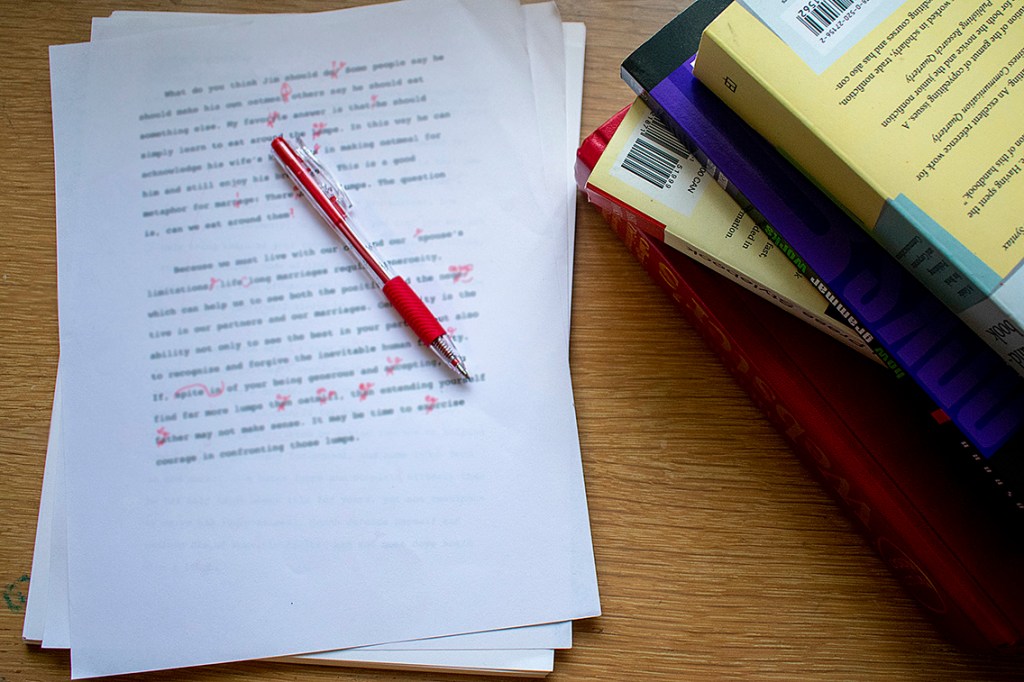
The most important thing you need to know is that, as the writer, you have the final say about any suggestions the editor makes. No reputable editor wants to change your voice or rewrite your story. My goal is to make your story readable and enjoyable. I don’t make wording changes unless they’re necessary for clarity or grammar. Sometimes I’ll suggest a wording change in a comment bubble.
This process applies to all levels of editing after developmental. I prefer to use Microsoft Word because Track Changes is more comprehensive than what’s available in other word processing programs.
Step 1: Write your story. Self-edit it. Make it the best you can on your own.
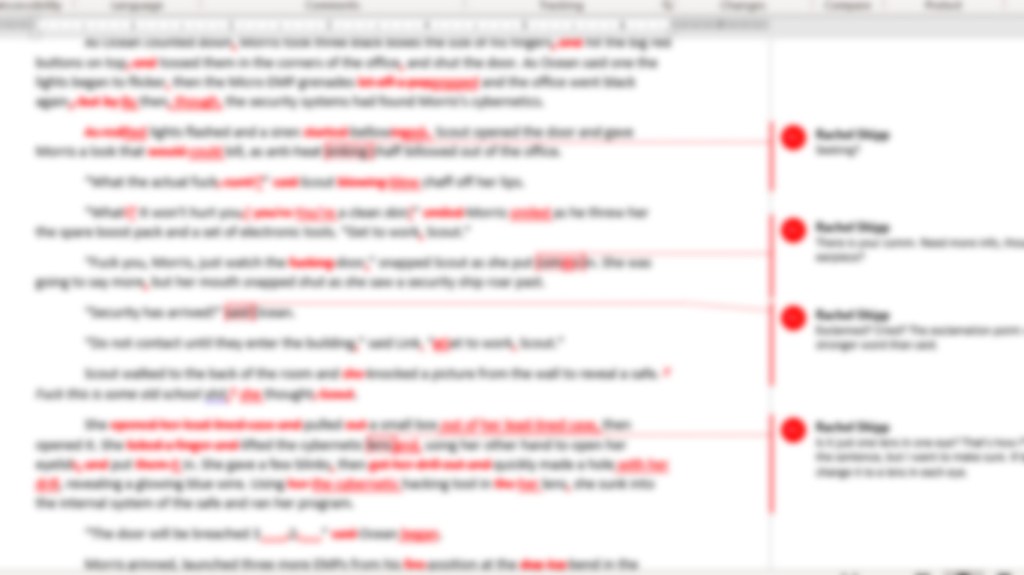
Step 2: I edit using Track Changes. I’ll be cleaning up the grammar and syntax, trying to make sure your meaning is clear. I’ll put questions and suggestions in comment bubbles.
This is what the document looks like when I’m finished with it. I’ve blurred the words here to protect the author, but you can see there’s a lot of red. Don’t let that intimidate you.
Step 3: You review the edits. This is where the magic of collaboration comes into play. You tell me what you like or don’t like, you answer questions, you ask questions. I truly look forward to getting a manuscript back from author because what they tell me informs how I approach the next step.
Step 4: After I’ve incorporated all of your comments and changes, I accept everything and do a complete second pass of the manuscript to make sure I’ve caught as many misplaced commas as I can. I then clean up the document and send both a marked-up version and clean version back to you. If I’ve done my job correctly, at this point you’re happy with your story and ready for the next step in your publishing journey.
In general, I see this process as a conversation. The two passes allow me to have a dialogue with the author, which helps to create the best book possible.
 Rachel Shipp Editing
Leave a comment